 Business License
esd smt PCB Rack Storage and Handling in Electronic Workshops
In electronic manufacturing, SMT assembly and PCB production workshops, printed circuit boards (PCBs) are core components. The protection during their storage, turnover and placement is crucial. A suitable PCB rack can not only standardize workshop management and improve turnover efficiency, but also effectively prevent PCB scratches, deformation, electrostatic damage and dust contamination, which directly affects product yield and production costs.
This article comprehensively analyzes PCB racks, covering their types, characteristics, selection points, use and maintenance, helping you easily choose the right PCB rack for your workshop.
What is a PCB Rack and What are Its Core Functions?
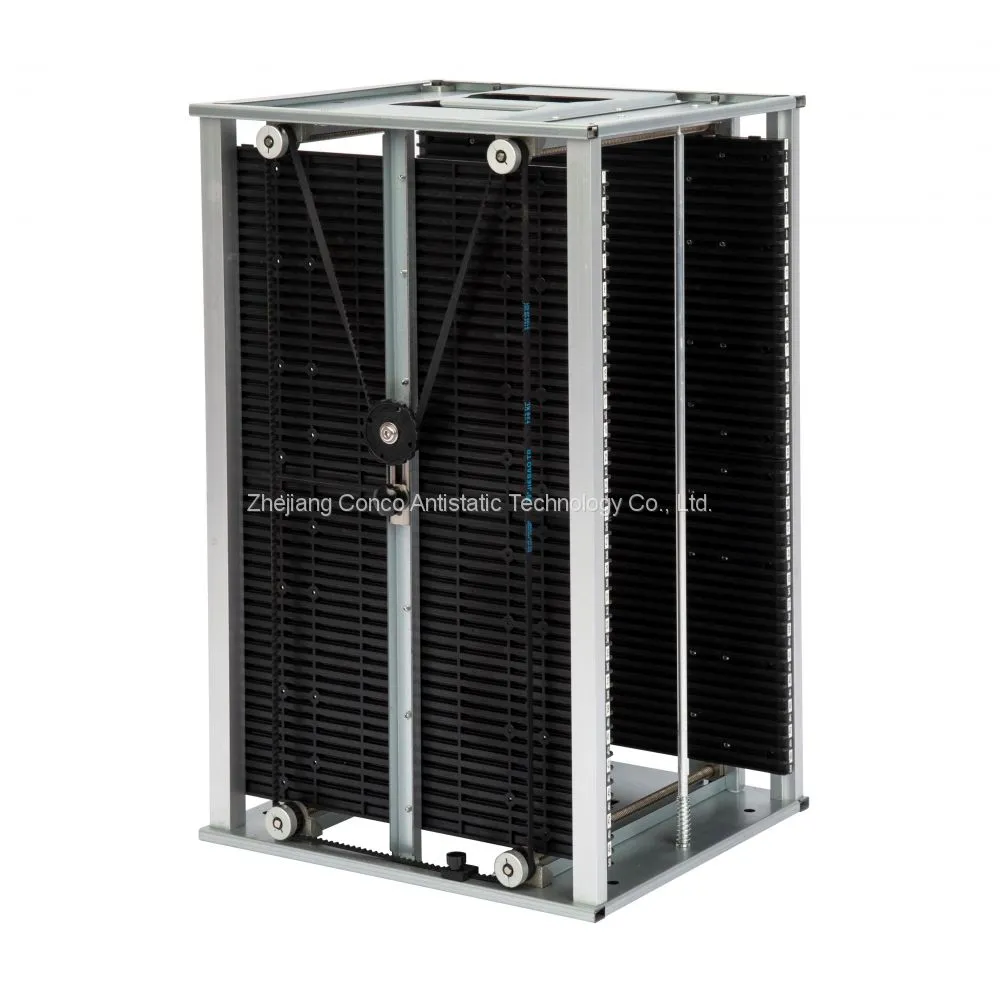
A PCB rack is a special storage and turnover appliance designed exclusively for printed circuit boards, mainly used for the storage and transfer of PCBs in the whole process of production, mounting, assembly, quality inspection and more.
Different from ordinary material racks, it is designed around the characteristics of PCBs, and its main functions are as follows:
1. PCB Protection: Avoid scratches and collisions on PCB circuits and bonding pads, prevent plate bending and deformation, and reduce the generation of defective products.
2. Anti-static Protection: Most PCBs are static-sensitive electronic components. Special anti-static PCB racks can quickly dissipate static electricity and prevent electrostatic breakdown of circuit board components.
3. Standardized Management: Layered and partitioned storage realizes orderly placement of PCBs, facilitating access and inventory, and improving workshop operation efficiency.
4. Space Saving: Vertical, stackable and movable designs maximize the use of workshop space and improve the messy situation of the workshop.
Common Types of PCB Racks to Meet Different Needs
There are various types of PCB racks on the market, with different structures, materials and functions suitable for different scenarios. The mainstream types are mainly divided into the following categories:
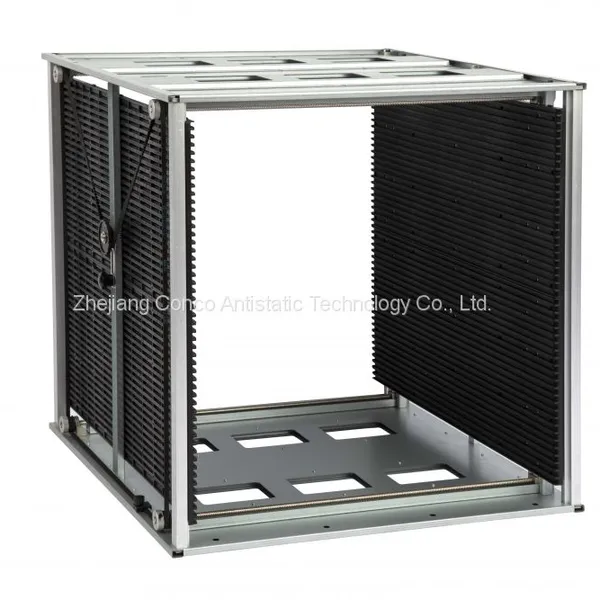
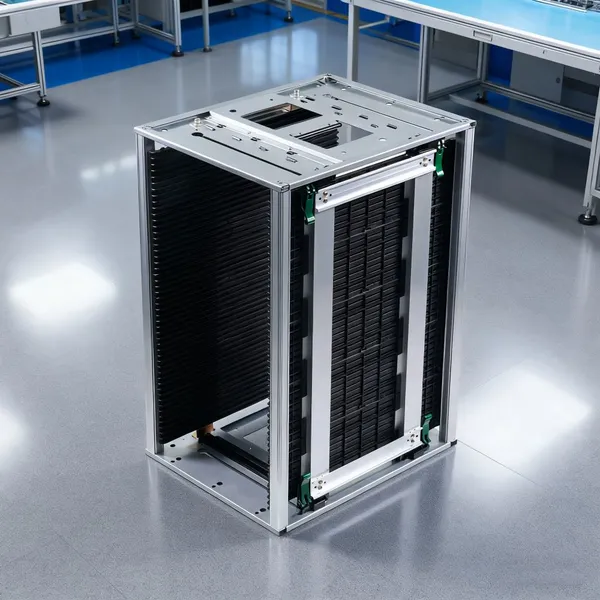
Anti-static Vertical PCB Slot Rack
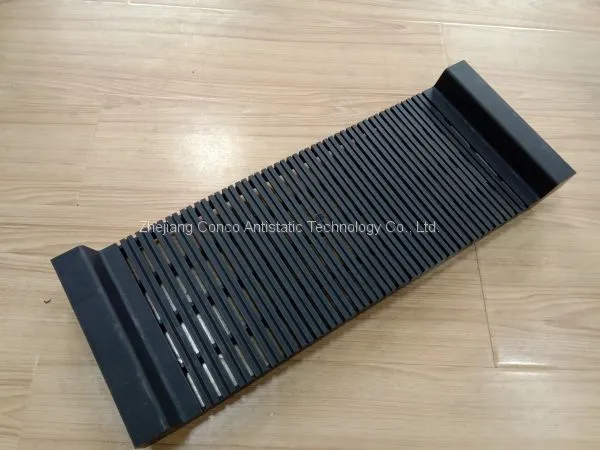
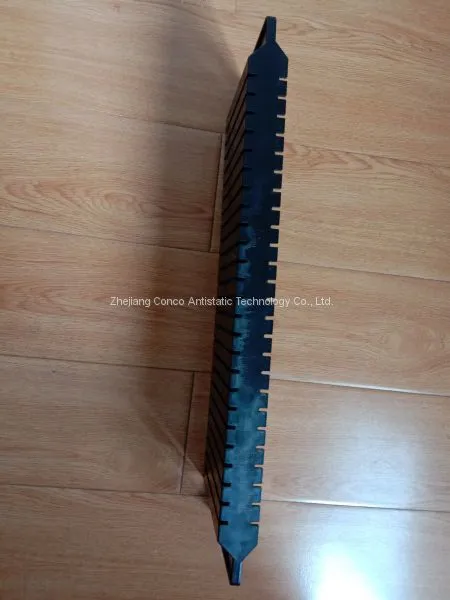
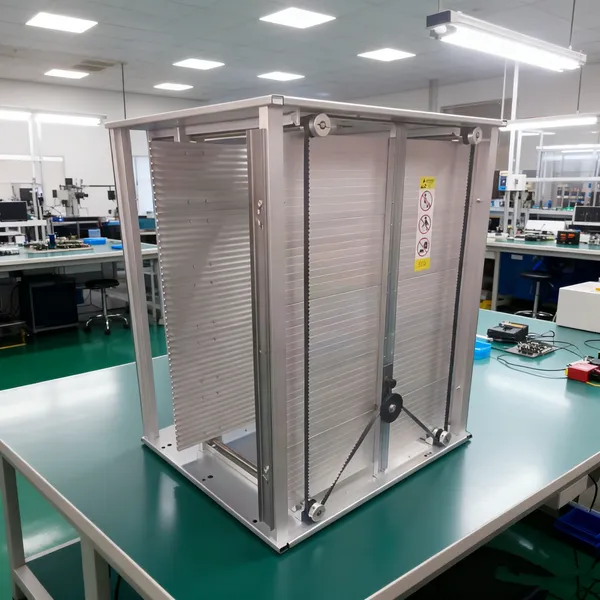
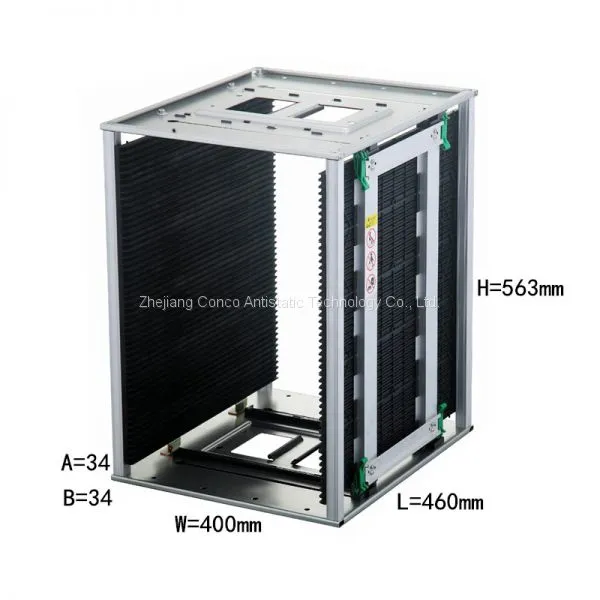
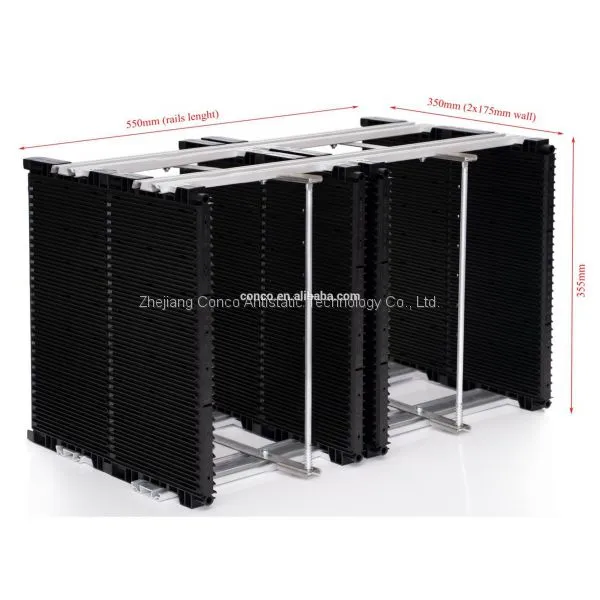
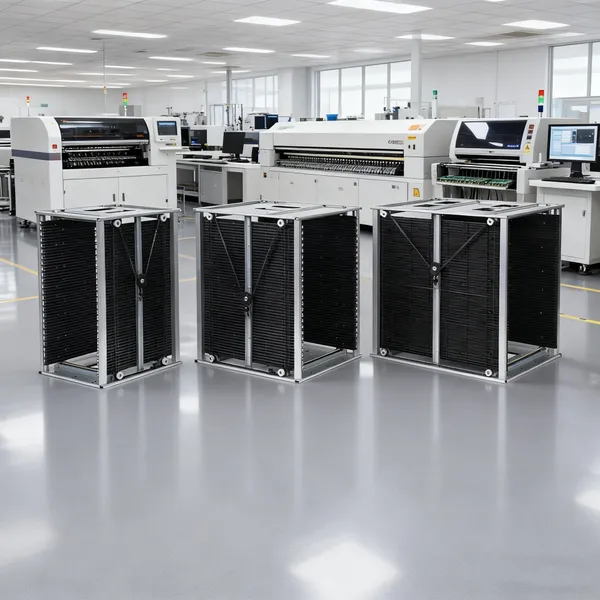
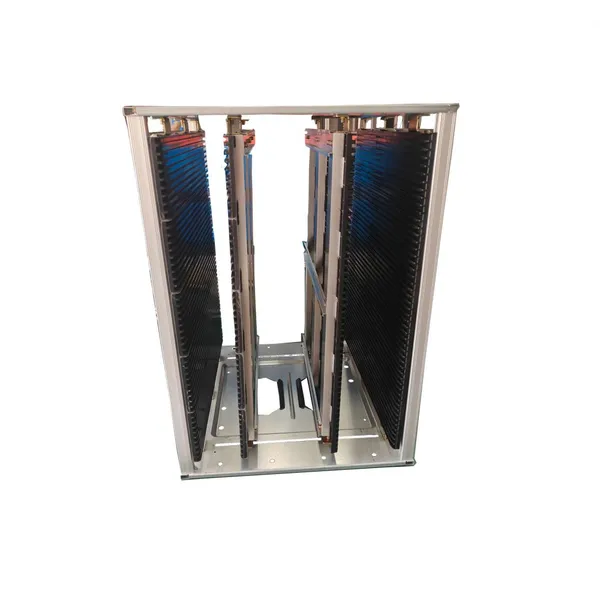
This is the most commonly used type in workshops, adopting a vertical slot design. PCBs are vertically inserted into the slots to effectively prevent plate bending and deformation.
• Material: Mostly anti-static PP plastic, anti-static plastic plus metal frame, with surface resistance stably at 10⁶-10¹¹Ω, complying with ESD anti-static standards.
• Characteristics: Adjustable slot spacing, suitable for PCBs of different thicknesses and sizes; hollow design for ventilation and dust prevention, light weight and stable load-bearing.
• Application Scenarios: Temporary storage at workshop stations, PCB turnover before and after SMT mounting, and semi-finished PCB temporary storage.
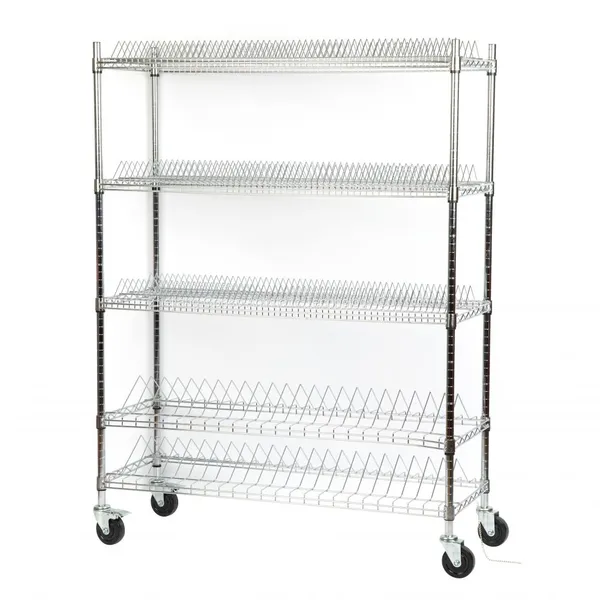
Anti-static PCB Trolley (Mobile Rack with Wheels)
Equipped with universal anti-static casters for free movement, it is suitable for PCB transfer between different processes and areas in the workshop.
• Characteristics: Multi-layer design with large capacity, equipped with brake casters for stable parking; some styles are equipped with handles and dust covers for safer transfer.
• Advantages: Eliminate the trouble of manual handling, reduce the risk of PCB collision damage, and improve process circulation efficiency.
• Application Scenarios: Cross-station and cross-workshop transfer of large quantities of PCBs, supporting use of assembly lines.
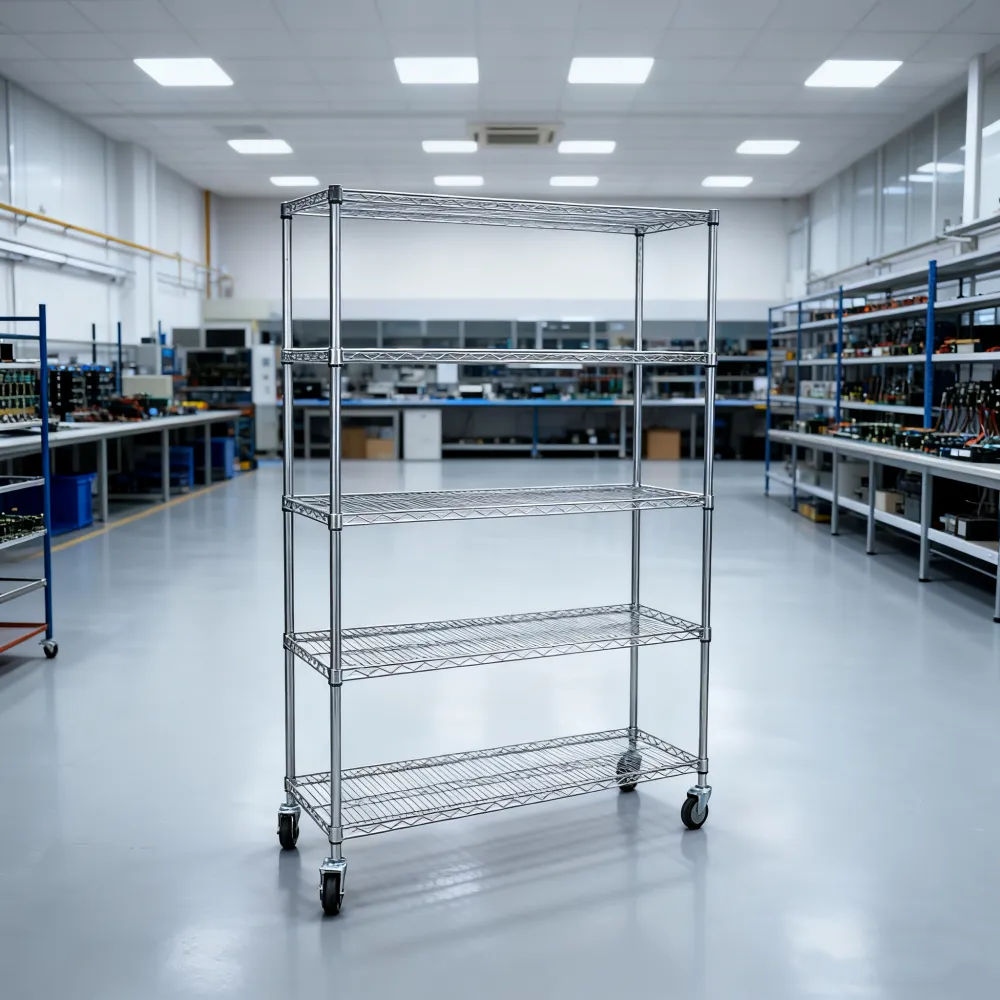
Fixed Multi-layer PCB Rack
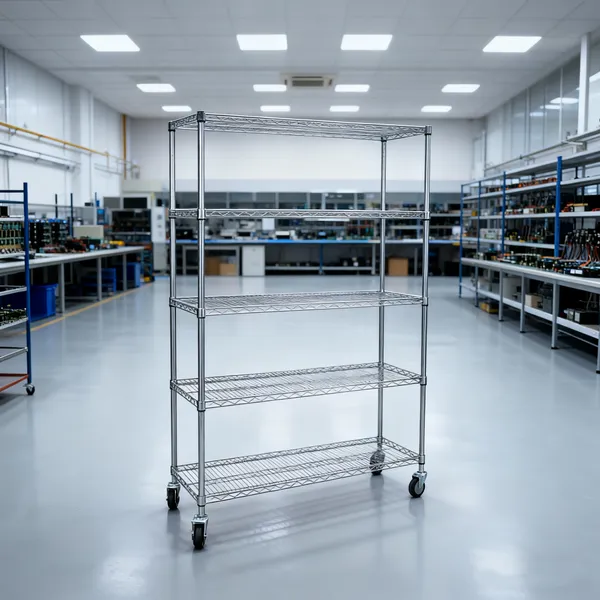
Floor-standing fixed structure with multi-layer storage design, each layer equipped with anti-static partitions or slots, featuring large storage capacity and suitable for long-term storage.
• Material: Chrome-plated carbon steel, stainless steel with anti-static coating, with strong load-bearing capacity and high durability.
• Characteristics: Freely adjustable floor height, can be matched with anti-static material boxes and baskets for classified storage of different types of PCBs.
• Application Scenarios: Long-term storage of large quantities of finished and semi-finished PCBs in workshop warehouses and material areas.
PCB Hanging Rack
Hanging design that can be used with assembly lines and shelves, saving ground space and being compact and flexible.
• Characteristics: Small size, easy installation, suitable for temporary storage of small-size and thin PCBs.
• Application Scenarios: Beside production assembly lines and workbenches, convenient for operators to pick up at any time.
5 Key Points for PCB Rack Selection
The quality of PCB racks on the market varies greatly. Do not only focus on price when purchasing. Grasp these core points to avoid pitfalls:
Prioritize Anti-static Performance
PCBs are extremely sensitive to static electricity, so anti-static styles must be selected! Confirm that the surface resistance of the rack is within the static dissipation range of 10⁶-10¹¹Ω, check whether there is an ESD anti-static test report, and reject ordinary plastic and non-anti-static materials to avoid static damage to PCBs.
Match PCB Size
Measure the length, width and thickness of commonly used PCBs in the workshop in advance, and select a rack with suitable slot spacing and inter-layer size to avoid the problems of unable to place due to too small size or PCB shaking and collision due to too large size.
Focus on Material and Durability
• For short-term temporary use: High-quality anti-static plastic models are optional, with high cost performance.
• For long-term large-volume storage: Choose stainless steel and carbon steel materials, which have strong load-bearing capacity, are not easy to deform and have long service life.
• For clean workshops: Prioritize materials that are smooth, easy to clean and not easy to accumulate dust to reduce PCB pollution.
Function Adapt to Usage Scenarios
• For fixed storage: Choose fixed multi-layer racks.
• For frequent turnover: Choose mobile trolleys with anti-static casters.
• For small-batch operations: Choose vertical slot racks and hanging styles for flexibility and convenience.
Practical Detail Design
Opt for racks with smooth and burr-free slots, rounded corners and stable structure; styles with limit and anti-falling design can further prevent PCBs from slipping; adjustable and detachable design is more practical to adapt to different specifications of PCBs.
Tips for Use and Maintenance of PCB Racks
5. Standardized Use: Handle PCBs gently, insert them vertically into the slots, avoid stacking and extrusion, and strictly prohibit placing items exceeding the load-bearing capacity of the rack.
6. Static Electricity Specifications: Anti-static racks must be grounded properly, and avoid mixed placement with ordinary materials and non-anti-static appliances.
7. Regular Cleaning: Wipe off dust on the surface of the rack with a clean cloth to keep it clean and avoid dust contamination on the PCB surface.
8. Regular Inspection: Check whether the slots, frames and casters are damaged, whether the anti-static performance is up to standard, and replace and repair in time if problems are found.
Summary
For the electronic manufacturing and PCB processing industries, the PCB rack seems to be a small appliance in the workshop, but it directly affects product quality and production efficiency. When purchasing, based on your own workshop scenario, focus on the three cores of anti-static performance, size adaptation and durability, you can choose the right PCB rack.
Standardized storage and turnover of PCBs can not only reduce the defective rate of products, but also make workshop management more orderly, which is also a key detail to improve production benefits.
If you are a workshop purchaser or production manager, you may accurately select the corresponding rack according to your own PCB specifications and use needs to make the production process smoother.

Contact Us

Recommended Products
-
 Esd Antistatic Wire Shelves Cart Smt Esd Reel Storage TrolleyNegotiableMOQ: 1 Set
 -
535*530*563mm Gear Belt Adjustment Smt Esd Magazine FactoryUS$ 25 - 220MOQ: 1 Set
-
355*320*563mm China Esd Smt Pcb Magazine Rack Manufacturer Supplier 26 YearsUS$ 18 - 150MOQ: 1 Set
-
Aluminum Magazine Rack Full Metal Gear Belt Esd Smt Pcb Racks 460*400*563mmUS$ 150 - 180MOQ: 1 Set
-
100pcs Pcb Storage 2 Columns Capacity Smt Esd Pcb Magazine Racks for Smt LineNegotiableMOQ: 50 Sets

-
600*400 Esd Conductive Plastic Storage Bins Antistatic Boxes Containers ManufacturerUS$ 5 - 12MOQ: 100 Sets
-
Antistatic Esd Laboratory Esd Stool Polyurethane Foam Working ChairUS$ 17 - 25MOQ: 50 Sets
-
Smt Esd Pcb Magazine Rack 460*400*563mmUS$ 28 - 40MOQ: 1 Piece
-
ESD Flat Storage Racks Chrome-Plated Mesh Shelving Cart Four-Wheel ESD Push Cart OEM Reel Storage Trolley 1200*600*1800mmUS$ 80 - 100MOQ: 10 Sets
-
Esd Pcb Storage Racks Factory and SuppliersUS$ 8 - 10MOQ: 50 Sets
-
Wholesale Aluminum Base Boards Smt Esd Pcb Storage Magazine Racks Supplier FactoryUS$ 160 - 200MOQ: 1 Set
-
460*400*563 mm Two Columns Double Pcb Capacity Smt Pcb Magazine Racks for Smt Loader and UnloaderUS$ 43 - 47MOQ: 20 Sets
-
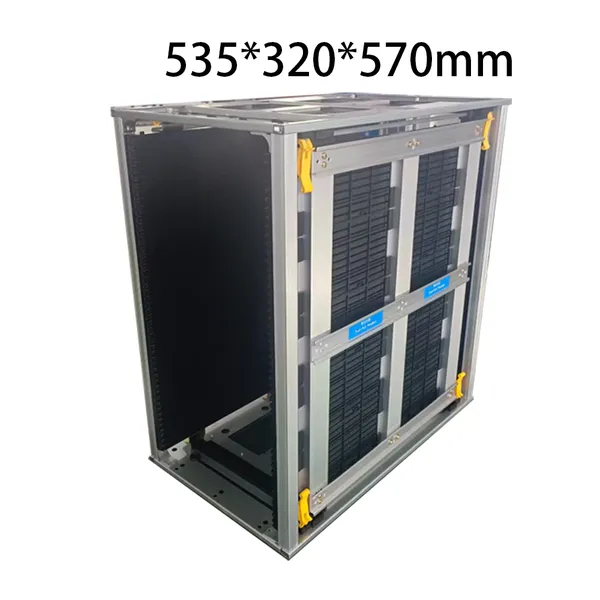
Custom Size 535*320*570mm Esd Smt Pcb Magazine Rack FactoryUS$ 59 - 65MOQ: 2 Sets
-
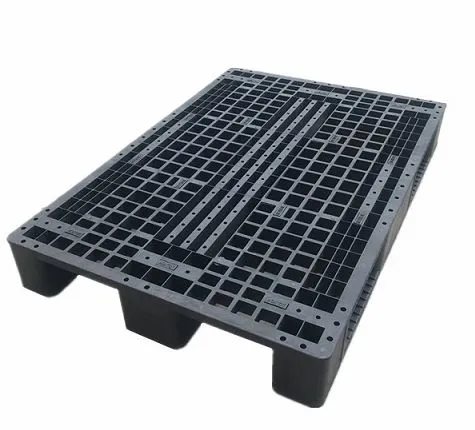
Esd Plastic Pallets of ElectronicsUS$ 20 - 30MOQ: 1 Set
-
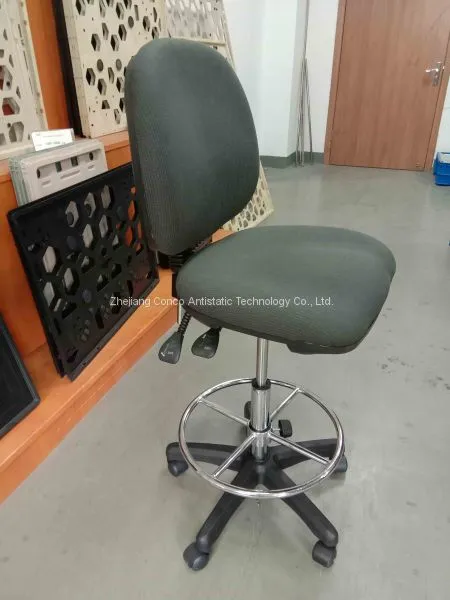
ESD Fabric Chairs Antistatic Chair Ergonomic Chair Fabric Esd ChairUS$ 55 - 78MOQ: 50 Sets
-
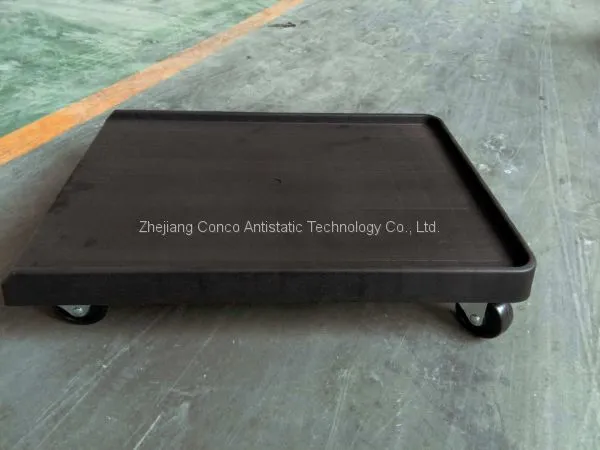
Esd Cart Antistatic Flat Trolley Plastic DollyUS$ 22 - 25MOQ: 1 Set
-
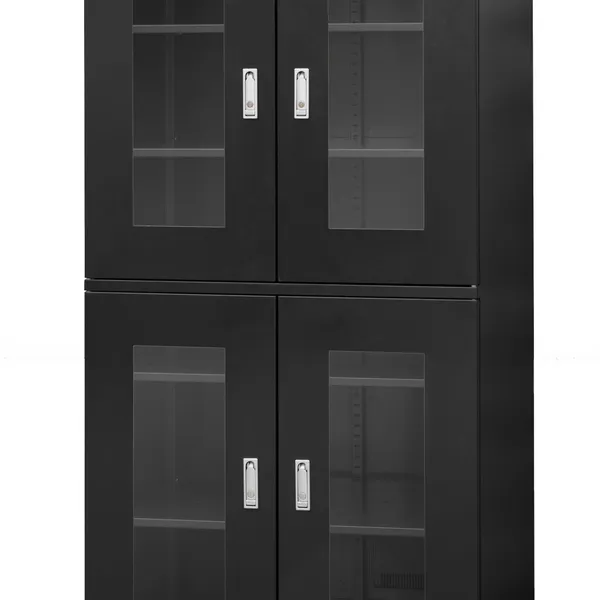
900*600*1890mm Esd Smt Dry Laboratory Dehumidifier Cabinet 870L Moisture Proof Dehumidifier Cabinet Humidity CabinetNegotiableMOQ: 1 Piece
-
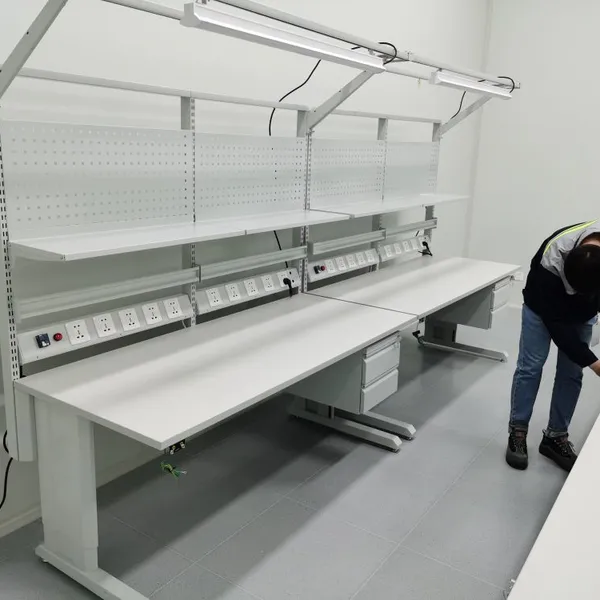
Height-Adjustable Antistatic ESD Workbench for Workshop Laboratory Electronic Workbench ESD Textured DeskNegotiableMOQ: 1 Set
-
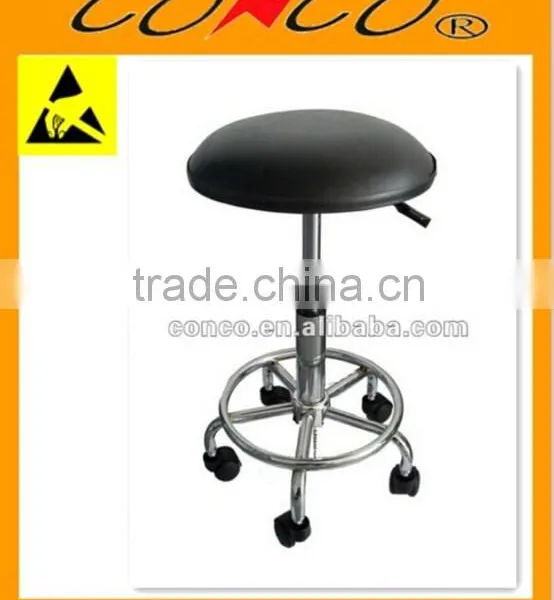
Antistatic Esd Stools Medical Stools With WheelsUS$ 20 - 28MOQ: 20 Sets
-
Industrial Strength Chairs With Antistatic LeatherNegotiableMOQ: 50 Sets